


A Look at the Spanish Inquisition that No One Expects


For those of you who have already doved—dove—dived—diven?—plunged headlong into Grayhound, the third book in the Callahan Chronicles, I doubt many of you expected to meet the Spanish Inquisition. No one ever expects the Spanish Inquisition, do they?

As a Protestant Christian, I grew up reading stories of the first Reformers, many of whom were hunted, persecuted, or even murdered by the Catholic Church—men like Jan Hus, Martin Luther, William Tyndale, Ulrich Zwingli, and John Calvin, not to mention countless other early Christians who were tortured and killed for daring to do what Jesus did: question and defy religious leaders. The cycle repeats. Those who dare challenge authority do so at their own risk.
My portrayal of the Inquisition is, perhaps, the most significant deviation from true history that I have intentionally taken in my stories. Of course, in a world of werewolves, vampires, and other such creatures of the night, the Inquisition would certainly have more pressing concerns than hunting down Jews, Muslims, and Protestants. Despite the glaring shift in focus, methods, structure, and scope of the Inquisition, there are still some vague similarities between my fictional Inquisition and the true Inquisition of history. As with the historical Inquisition, the Inquisition of Grayhound believes that their methods are necessary to achieve a greater good. My fictional Inquisition believe that they must protect humanity from monsters and that any methods—including torture—are quite acceptable in order to reach this vital goal. The historical Inquisition believed much the same. Their view was that heresy, false teaching, and sin not only put the evildoer's soul at eternal risk, but also any others who believed them. It is no wonder that such a belief would seem to justify any temporary cruelty in order to “save” a soul from supposed eternal torment. Cullen Murphy explains it in much the same way in an NPR article comparing Inquisition methods with modern interrogation: “Ultimately, the justification that it invokes is the same anyone uses when they're using torture for reasons that are not sadistic and that is, in essence: 'The moral cause that we're engaged in is too important to settle for half-measures.'”
This did not, and cannot, justify their actions. Sincerity does not excuse evil. As William Shakespeare wrote in Hamlet, “We are oft to blame in this, 'tis too much proved, that with devotion's visage and pious action we do sugar o'er the devil himself.” Simply put: evil is often disguised as goodness. There is no evil done which proves greater than that done in the name of the “greater good.” If the history of humanity proves anything, it proves that we often become the very thing we hoped to destroy, all while raising high the banner protesting against what we have become. This trend can easily be seen in 1st Century Israel, The French Revolution, Communist China, the Soviet Union, Islamic regimes, even modern day Cancel Culture. Protestants were not immune from this either when they gained power over the Catholic Church. Early Christians were hunted down and killed by the Jews and by Rome, yet once the Catholic Church became dominant, they in turn hunted down and killed fellow Christians who they deemed heretics. Later, Catholics were executed by Protestants for the same reasons, all in the name of Jesus Christ, who was murdered under exactly the same circumstances. The blind irony is remarkable.
A Brief Review
Although the Spanish Inquisition is the most famous and the longest lasting, the Inquisition was not limited to Spain, nor did it begin there. Exact origins are a bit difficult to pin down without first identifying which “Inquisition” you mean. The first Inquisition began in southern France in 1184, known as the Medieval Inquisition. The Roman Inquisition began in 1542 and was rather light-handed in comparison to others. The Spanish Inquisition began officially in 1478. The General Inquisition began in Germany in 1233, under Pope Gregory IX, in his bull, Excommunicamus, issued in 1231. It expanded to Spain the following year and became the General Institution the year after. For a complete timeline of events relating to the Inquisition, see the link at the bottom of this article, spanning from 1220 all the way to 1966. Depending on your definition, the Inquisition is technically still part of the Catholic Church. The official end of the Spanish Inquisition happened in 1834, but in 1908, the more generalized Inquisition had its name changed to the Holy Office and then to the Congregation of the Doctrine of the Faith, though its role today is drastically changed from centuries before.
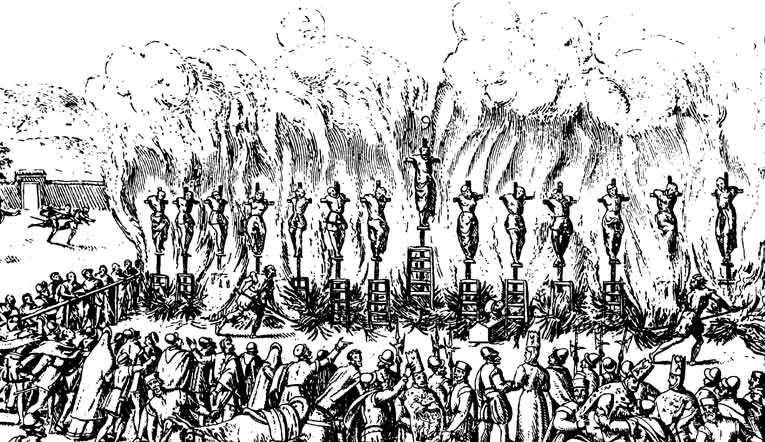
During the height of the Spanish Inquisition (not the entire Inquisition as a whole, nor including general persecution not tied to the Inquisition specifically), from roughly 1500 to 1800, modern estimates put the death toll at 3,000-5,000 executions, with most happening during the fifty years of intense persecution around 1480-1530. This is, again, only in Spain, but given the long existence of such an organization and the number of trials the Spanish Inquisition oversaw, most estimates put execution rates only in the 1-5% number. While this does not excuse those wrongfully put to death, it does put things into perspective when compared against, say, the French Revolution, which saw 17,000 people beheaded during the Reign of Terror, which lasted less than a full year. Again, that is potentially 5,000 executions in a 300 year span versus over three times that number in a single year.
In Defense of the Inquisition
While we should never shy away from the horrific aspects of history, we must always remember that it is the victors who write history, and much of the history pertaining to the Catholic Church—and the Inquisition specifically—comes from later Protestant sources with a serious, though valid, grudge. We must be careful to consider such issues from both perspectives, and though some Catholic apologists tend to whitewash the evils of the Inquisition, we must be careful not to fall into either error.
The Inquisition had a wide range of authority. During the height of the Catholic Church's power, the line between civil law and religious law often blurred or disappeared altogether. In Spain especially, there was no practical difference between civil and religious law. The Spanish Inquisition investigated cases involving all manner of offenses: not only religious crimes like blasphemy, heresy, and witchcraft, but sexual crimes like sodomy, rape, pedophilia, incest, bigamy; civil crimes like forgery, tax-evasion, general fraud, treason; not to mention more standard charges like domestic abuse, theft, and murder. Given this, the number of wrongfully tortured or killed victims drops even further.
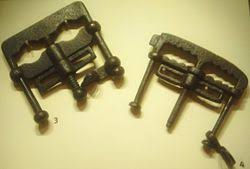
While it is indisputably true that the Inquisition used methods of heinous torture in order to coerce confession, this was often a last resort, and they were hardly the only organization during this time to use torture. Indeed, the Catholic Church put limitations on the type of torture that was allowed, while other courts rarely did. These limits were to “not maim, mutilate, draw blood, or cause permanent damage.” Of course, what entailed “permanent damage” was up for debate, and it is without doubt that these limits were often stretched well beyond their intended boundaries. Creative alternatives were used instead, such as the rack, thumbscrews, and waterboarding. This is also the main reason why serious offenders were burned rather than beheaded: burning does not require bloodshed. Certainly, torture on any level is evil, but the Inquisition were hardly the only ones using torture, and more recent studies seem to indicate that the Inquisition used torture less readily and less frequently than their secular contemporaries.
In Offense of the Inquisition
On the other hand, corruption is inevitable, and any time there is an attempt to regulate morality with corporal punishment, evil is the result. The history of the Inquisition is no different. Protestants who refused to recant their beliefs were burned at the stake. Before Protestantism reached Spain, the Inquisition forced Jews and Muslims to convert or face exile. However, this ultimatum only opened the door for more persecution. Suspicions for those who stayed remained high, and even though technically converted, these conversos were withheld from holding office, testifying in court, or moving to Spanish holdings in the Americas. The same bans applied to their children and grandchildren as well, who were not “pure-blooded.” Most were rounded up into ghettos. Quite a slap in the face to genuine Christianity and Galations 3:28 specifically. Those suspected of still practicing Jewish or Muslim laws were often brought to trial. Avoiding unclean foods or keeping the Sabbath—both commanded by Scripture—were enough to land one within Inquisition courts, and since the Church did not sanction such practices, it mattered little how much Biblical evidence supported the accused. So far as the Inquisition was concerned, those keeping these precepts were found guilty in the eyes of the Church, and therefore in the eyes of God.
Those accused—justly or unjustly—rarely left without some punishment. Conviction rates were often above 95%, though torture and death were not as common as many believe. The Inquisition also could apply fines, exile, or penance of varying degrees, from community service to pilgrimage to lifelong service on galley ships, and these lesser punishments were often enough. The average lifespan of a galley slave was less than two years. Death (usually by burning at the stake or strangling, since the Church banned the shedding of blood) was reserved only for the obstinate or unrepentant. Tragically, those with genuine religious convictions, like Jews, Muslims, and early Protestants, almost always fell into this category. The Church was the divine and only arbiter of truth, and those opposed were automatically in error. Just like the Pharisees of old and their ancestors before them, any challenge to “divine” authority brought death, just as it did to Christ and His disciples, and as it did to the prophets before them, so it did to the Reformers.

Another serious problem was that the Catholic Church did not fund the Inquisition. Rather, money came exclusively from seized property and estate. All property of the accused, if convicted, reverted to the Catholic Church, and therefore the Inquisition. This idiotic or greedy measure ensured the extremely high conviction rate. An Inquisition that did not convict did not survive. Cries of abuse were common, accusing the Inquisition of prosecuting only the rich in order to seize their holdings. Accusations against suspected heretics could come from any source and were kept private. Rivals and enemies could easily lay an accusation against a competitor, certain that their rival's business, house, money, and all property would become property of the Mother Church, while the accuser remained entirely anonymous and free from retaliation. It is obvious how easily such a system could be abused. Conversos—converts or those who had Jewish or Muslim blood in their recent ancestry—were in constant danger of accusations of heresy, especially when financial success was their only true crime.
The End of the Inquisition
While some modern conspiracy theorists claim that Freemasonry, the Illuminati, and the Catholic Church (and by consequence, the Inquisition) are all linked, I find it ironic that besides Jews, Muslims, Protestants, and even wayward Catholics, the Inquisition also prosecuted those accused of being involved in Freemasonry and the Illuminati. In fact, the Catholic Church has considered Freemasonry to be heretical since 1738. During the Inquisition's height, even the suspicion of practicing Freemasonry was enough to warrant arrest. In 1815, Francisco Javier de Mier y Campillo, the Inquisitor General of the Spanish Inquisition, denounced lodges as “societies which lead to atheism, to sedition, and to all errors and crimes.” Similarly, the Illuminati, or “Alumbrados” were also considered heretical.
History proves time and again that simple explanations fail to truly grasp complex humanity. The long and troubled history of the Catholic Church and the Inquisition is no exception. While it is a veritable fact that horrible deaths of the innocent did result at the hands of the Catholic Church, the same could be said of the Salem Witch trials under Puritan fervor. While we, as people, are quick to cast blame on entire groups (whether that be Catholics, Christians in general, Liberals, Conservatives, Muslims, Jews, Atheists, or whatever group we decide is the enemy), reality is never so simple. While there were certainly sadistic and greedy Inquisitors, there were surely also ones who did their best to be just and merciful.
We should never hesitate to call evil by its right name, but we must always do so with care. Jesus never hesitated in accusing the Pharisees and religious leaders of their hypocrisy and pride, but He was equally ready to welcome Nicodemus's questions and dine with Simon the Pharisee. And though the Catholic Inquisition did wrongfully torture and kill Christians in the name of Christ, we must not forget that Protestants did the very same things at various times, as did the Jews before them. None who participated in such evils should be excused, and certainly not celebrated, but neither should they tarnish the Gospel of Christ the Messiah, for He was a victim of the very same evil.
Humanity has often attempted to enforce goodness through threat of force, and it has never once worked, nor is it Godly, no matter how loudly those doing so invoke His name. Christ knew this and warned His followers against it, though He also warned them that such measures would inevitably be turned on them. He was, tragically, correct. The Catholic Church forgot this warning, and the Inquisition became an instrument of the selfsame evil that killed the Lord they claimed to serve. Let us not forget this grave warning, and let us never do the same.
These blogs are designed to give you a brief look at the true history which plays a part in my novels, The Callahan Chronicles.
For more information on this subject or the Callahan Chronicles, check out these links:
The Callahan Chronicles - by Paul Campbell
Grayhound - buy on Amazon
Facts About the Inquisition - Catholic Straight Answers
A Timeline of the Inquisition - University of Notre Dame
What is the Inquisition? - Catholic Answers
How Many People Died in the Inquisition - Nathan Busenitz


Comments